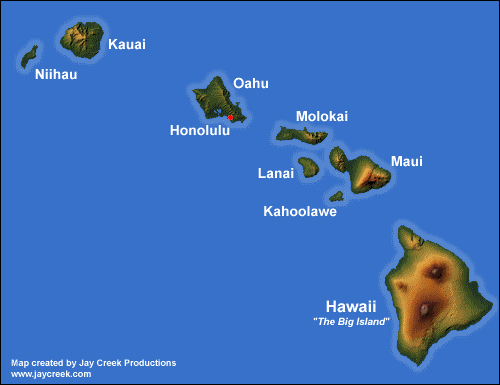
Hawaii is an lush tropical archipelago made of volcanic mountains that rise from the deep floor of the Pacific Ocean thousands of miles from anywhere else. In fact, from base to peak Mauna Kea on the Big Island is the tallest mountain in the world at almost 33,000’ (as opposed to being the highest). There are eight large islands stretching from north to southeast about 500 miles; and many hundreds of smaller islands further out. Hawaii is the only state in the United States not in North America; it is west and south in an area of the world called Oceania. Honolulu, the capital, is just east of Pearl Harbor on the southern shores of Oahu, the most populous island. Oahu has nearly the same latitude as Puerta Vallarta, Mexico and a longitude near Kvichak Bay, Alaska.
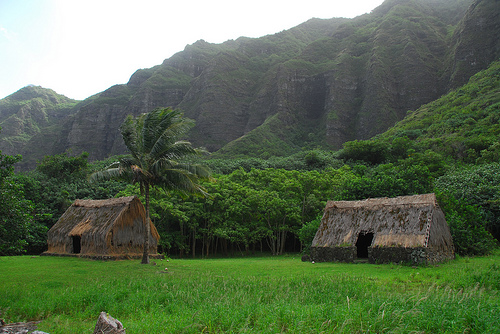
The first people to inhabit Hawaii were Polynesians who, starting about 1300 years ago, crossed thousands of miles of ocean, probably in double-canoes with sails, coming in successive waves from the from the Marquesas Islands, Bora Bora and Tahiti. In the warm climate and trade winds of Hawaii they settled in chiefdoms ruled by chiefs, some growing to encompass whole islands, and were entirely self-sustaining with fishing, some farming and livestock, and picking fruit. They worshipped many gods, created myths, and practiced human sacrifice. They thrived on the beautiful islands, living in thatched villages by sandy blue shores beneath the high cliffs of green mountains. In the evening while men beat bongos, the women danced in grass skirts gracefully moving their arms and hips. Late in the 18th century all Hawaiians came under the rule of King Kamehameha the Great. When Captain Cook arrived on sailing ships in 1778, the native population was almost half a million.
Captain James Cook and his crew were the first known Europeans in Hawaii. On a return voyage in 1779, to repair a mast of one of his ship on the western shore of the Big Island at Kealakekua Bay, Cook and four of his marines were killed by the natives in a dispute that may have begun when Cook’s party burned sacred relics for firewood. Cook’s voyages were published and many Europeans and Americans; explorers and whalers – finding it a convenience port – and missionaries; began coming to Hawaii bringing along diseases; measles, small pox, and the flu. Subsequently, the native population dwindled, although they continued to rule the islands for almost 100 years.
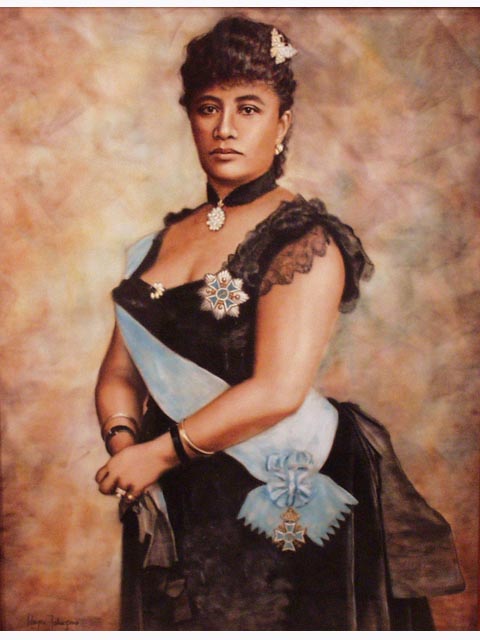
In 1887 white businessmen and lawyers forced King Kalakaua to sign the Constitution of the Kingdom of Hawaii, reducing the king to a figure head. When Kalakaua died he was succeeded by his sister, Queen Lili’uokalani, who was over thrown in 1893 and replaced by a provision government composed of Americans. The United States government demanded Queen Lili’uokalani be reinstated but the provisional government refused. Queen Lili’uokalani was the last monarch of Hawaii. In 1898 Hawaii was annexed by the United States and granted self-government. Hawaii was a great sea port and continued to thrive, but in a different way. Agriculture was king and the sugarcane fields found cheap labor in the new waves of immigrants from the Philippines and Korea, and the islands became controlled by large plantation owners and financial institutions.
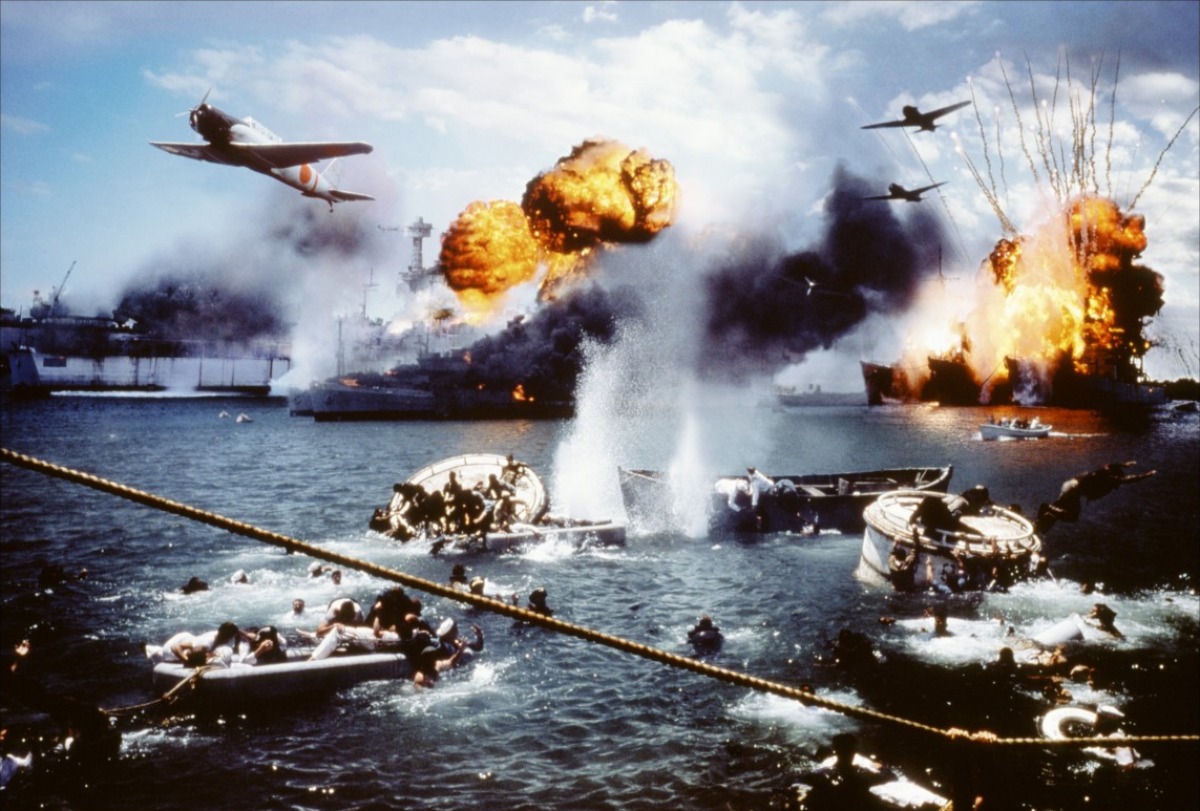
Warships began visiting Hawaii as early as the 1820s anchoring in the lagoons for repairs and supply replenishment. At the end of the American Civil War and the purchase of Alaska, American trade with Asia increased and so did the number of vessals arriving in Hawaiian ports. Upon annexation the United States established a permanent naval base at Pearl Harbor on the island of Oahu. Throughout the 1920s and 30s tensions with Japan increased and war became a looming concern. Early in 1941 the Pacific Fleet was moved from San Diego to Pearl Harbor to protect the country’s interests. In November a fleet of Japanese aircraft carriers sailed from Japan to a position about 200 miles north of Oahu and on the morning of December 7, 1941 launched aircraft attacking Pearl Harbor and ending a 150 years of American foreign policy that was mostly isolationist.
Hawaii had been a self-governing democratic territory since annexation. There had been several attempts to become a state, but the plantation owners and those in charge preferred the lack of immigration and labor laws that would not be so with statehood. This changed after World War II when the large new generation of laborers, born U.S. citizens, voted the party of the plantation owners out of office and campaigned for statehood. In 1959 the United States Congress passed the Hawaiian Admission Act, which President Eisenhower signed into law. The residents of Hawaii voted overwhelmingly “yes” on the ensuing referendum and Hawaii became the 50th state in the Union.
The history of a place, especially when brief, is interesting but impersonal. But when you visit a place like Hawaii, which I and my son are about to do, then it becomes a part of your life. This Saturday morning we will be flying to Honolulu and, upon landing, driving from there to the windward town of Kailua, where we have rented a cottage for the week.
Ho’okomo, No Keia La, No Keia Po, A Mau Loa
 Wylie Graham Mclallen