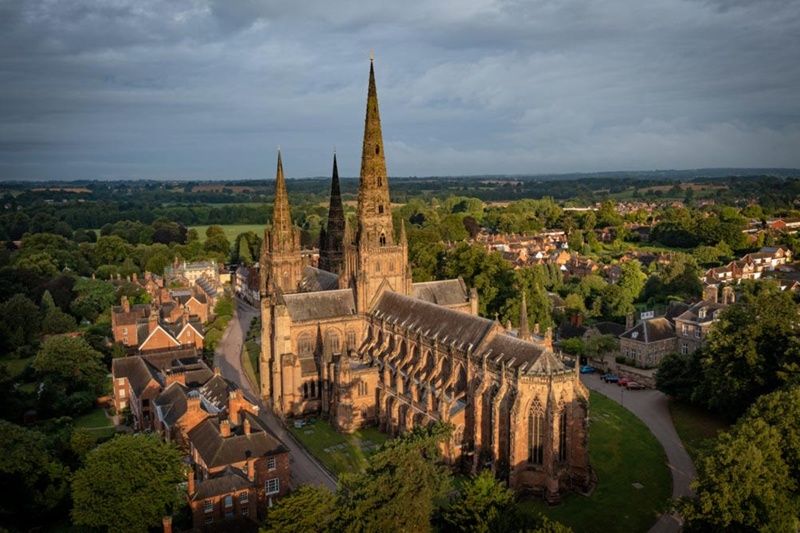
England’s greatest scholar, Samuel Johnson, was born in the Midlands in the cathedral town of Lichfield, Staffordshire, which lay at the crossroads of two major north-south routes: from London up to Liverpool, and from Bristol to Sheffield, Leeds. Though the roads were medieval and dangerous, people still had to travel, and as an important coaching stop, Lichfield had inns and energy. The town, quaint and beautiful, had old families with fine homes, but the Johnsons were newcomers, and lacking money, did not move easily within the social orbits. Johnson would write, “My father considered tea as very expensive and discouraged my mother from keeping company with the neighbors.”
His father, Michael Johnson, a brawny man who suffered from depression, sold and bound books in Lichfield and did well at first but failed to translate early success into lasting prosperity and his finances would steadily deteriorate. He was forty-nine years old, tired, and financially burdened when introduced to Samuel’s mother, Sarah Ford, thirty-seven and from a good, affluent yeoman family in Birmingham. When they married Michael used Sarah’s dowry to buy thousands of volumes belonging to the Earl of Derby (some of which hung around the shelves of his store for decades) along with an imposing home on Breadmarket Street that served as shop and domicile. Samuel Johnson was born in the large bedroom over the bookstore on Wednesday, September 7, 1709.
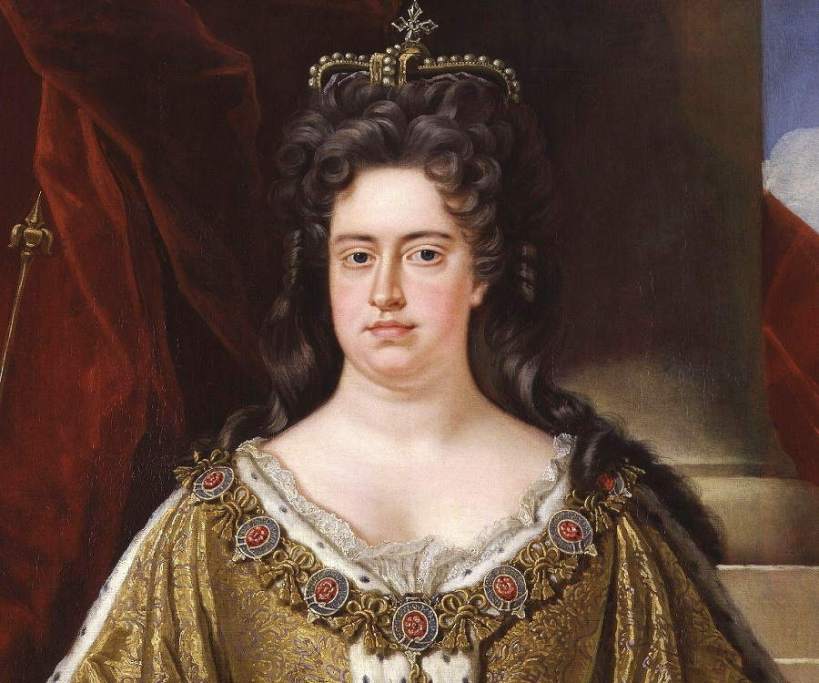
“My mother had a very difficult and dangerous labor,” Johnson later wrote. “I was almost born dead and could not cry for some time.” Fearing imminent death, the parents baptized him on the same day. Soon “scrofulous sores” began to appear on his body: scrofula, a tubercular infection of the lymph glands, may have damaged the baby’s eyesight, leading to almost complete blindness in the left eye, partial vision in the right one, and affected his hearing, too. Desperate, the mother took her son to London to be “touched” by Queen Anne in a religious ceremony, staying in a book seller’s shop near St. Paul’s Cathedral. Perhaps the Queen’s touch did help; however, like his father, the child was endowed with a strong, robust, large physical frame, and had the tenacity and courage that showed itself early in life to overcome his handicaps.
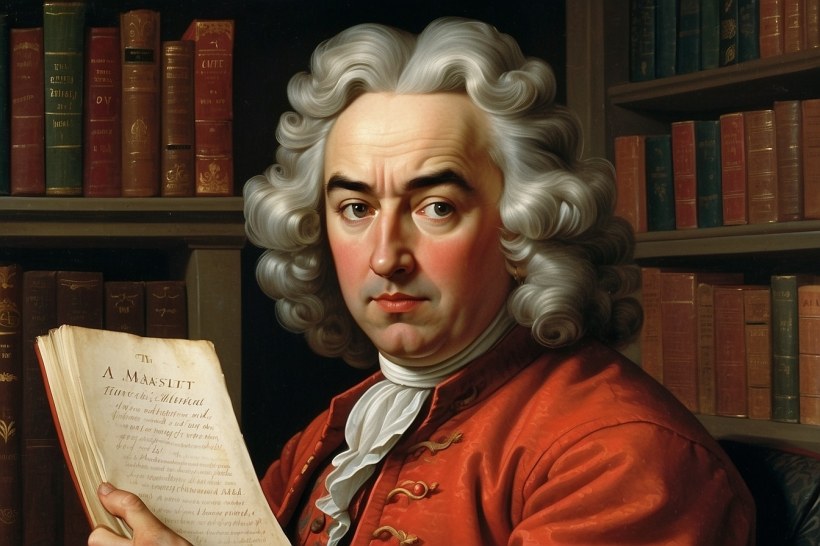
The child became a prodigy who loved reading Defoe’s Robinson Crusoe, Bunyan’s Pilgrim’s Progress, Don Quixote, and plucking Hamlet off the shelves of his father’s bookstore, gravitated to Shakespeare, and could create and recite his own verses. At seven he began his formal education at Lichfield Grammar School: writing and arithmetic were part of the curriculum, along with some Greek, but mostly taught were Latin grammar and translation. Young Samuel Johnson thrived under the intelligent care and gentle encouragement of a master named Hawkins; attention and care that were crucial because the boy’s large frame, scrofula scarred features, severely limited eyesight and increasingly odd gesticulations and movement, not to mention a sullen and reserved disposition, were too likely to be feared and ridiculed. He could read and work at a tremendous speed as he read with great pleasure Aesop’s Fables, Cicero’s letters, Ovid, Virgil, Horace, Pliny, Juvenal, Plautus and Livy. Hearing verses, he could recite them almost immediately, but wanting to be liked by his classmates, he was tactful about his genius and drive for superiority. The force of Samuel’s personality, his large uncouth presence, and his academic brilliance made a lasting impression: he was thought to be “the head and leader” in his class.
Sam was fifteen when serious financial problems emerged with his father undergoing an emotional crisis aggravated by depression. So, Sarah sent her son to her nephew Cornelius Ford near Birmingham. A Cambridge graduate married to a wealthy older spinster, Cornelius was impressed with his well-read, strong-minded much younger cousin, and Sam was thrilled with the polish and brilliance of Cornelius, who, conscientious, discrete, lively and charming, expanded his views of life’s possibilities, sketching out images of the world and the London Literary scene. His cousin’s library contained Pope’s new edition of Shakespeare and Daniel Defoe’s novels and journals. There were excursions to wealthy estates where Johnson may have met George Lyttelton, a close friend of Alexander Pope. The days and weeks of the visit stretched into months before he returned to Lichfield a dramatically altered young man.
In Lichfield, with his father’s finances worsened, Sam helped bind books in the parchment factory and also worked in the bookstore, where he much preferred reading the books to selling them. Oblivious to all else but the books, his father’s shop was like a huge biblio-cabinet of curiosities, a bookish bower of bliss tempting him into divergent and crisscrossing intellectual, cultural, historical, literary, religious, scientific, and geographic paths. And though his reading took him everywhere, his father thought him idle, and Sam, seeing friends less able than he go off to Oxford and Cambridge, felt an empty, gnawing frustration. However, soon there came a break: a wealthy townsman named Gilbert Walmesley, who bought many books at Michael Johnson’s shop, noticed Samuel and invited him to the Bishop’s palace.
Walmesley was a judge on the ecclesiastic courts, well learned and pious, and a prominent member of the Whig party, the forward-thinking party of power and wealth. Johnson thought himself a Tory, the party that treasured the past, culturally and institutionally, but was impressed by fashionable Whigs like Walmesley. Plucked from obscurity and placed in a palace, the teenage Johnson began to shed his provincialism. Through Walmesley Sam met David Garrick, who had also grown up in Lichfield. Davy, eight years younger than Sam, was friendly and vivacious, irreverent and endearing in an amusing way, and small for his age, while Sam was long, lank and awkward, melancholy and argumentative, became his friend for life. Johnson was also exposed to the softening influence of female society and learned to understand and enjoy female company. England was moving ahead excitingly during these years. In 1727, Jonathan Swift published his caustic ironic romance satire Gulliver’s Travels in 1727, and the great age of satire had dawned.
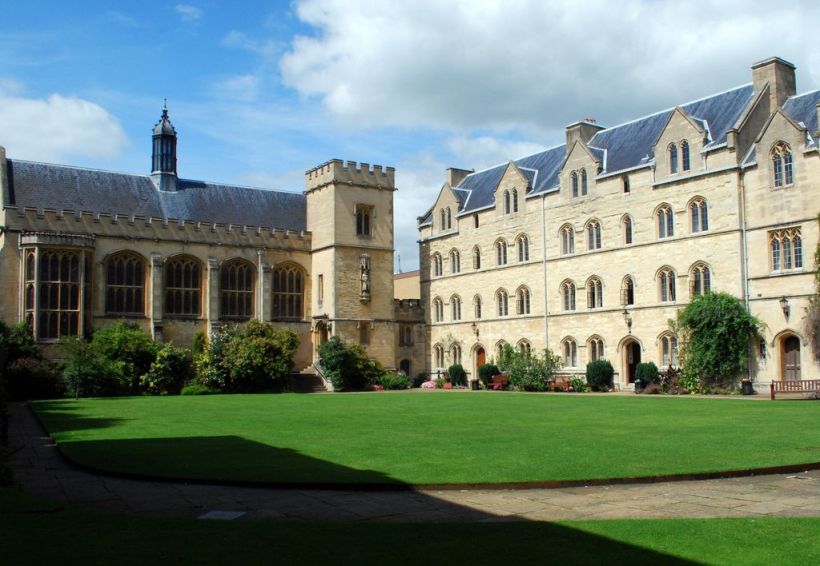
When Sarah Johnson’s rich cousin left her £40 the parents were able to send their brilliant and restless son to university for a year. They decided on Pembroke College in Oxford. His tutors were at first taken back by the physical appearance of this large, muscular, scarred, short-sighted young man with odd abrupt movements, but quickly recovered when they heard him quote Roman grammarian Macrobius to demonstrate the extensive reading in which he had indulged. “When I came to Oxford,” Sam later wrote, “Dr. Adams, now master of Pembroke College, told me I was the best qualified for the University that he had ever known come there.” He entered Pembroke as a commoner, the sons of relatively poor families with limited budgets and the largest group of students.
Commoners had a compulsory daily dress of ankle-length sleeveless black gowns. Finer more embellished gowns were worn by the two socially elevated ranks: the nobleman and the gentleman commoners, who were rich and considered commoners very low. Living in a small room near the roof of the hall reached through dark, bare, twisting stairways, Johnson quickly realized he had not landed in a golden lap of learning, saw glaring defects in the rules, and did not fit quietly into the social life. Discovering his tutor couldn’t teach him much, he remarked that his lecture on logic wasn’t worth half of the two pence fine incurred for missing it. However, though Pembroke was a small, contained world, the town and countryside offered an abundance of amusement night and day, and Johnson found the time to partake in conversations in the coffeehouses and liked to stroll through Christ Church Meadow or through the countryside to nearby bucolic villages.
As his clothes became more threadbare, Johnson applied himself hard at his studies, devouring Shakespeare, Spenser, Milton, Waller, Dryden, Addison and Pope and reading Homer and Euripides, and impressed others as an intellectual prodigy. But his days at university were numbered and as another Christmas approached, with no further gift of money, he left on December 12, 1729, after thirteen months at Oxford and arrived home deeply depressed. He took walks and wrote poetry to alleviate his depression, but, after Oxford, Lichfield seemed like the end of the world. He was twenty, had no degree and no money, and with no appetite for business, began teaching at a grammar school in the village of Market Bosworth.
In December, 1731, his father died at the age of seventy-five, leaving his mother a few pounds, the house and the bookshop now run by a servant. Samuel walked the 25 miles back to Lichfield and applied for another teaching position, but his huge size (6’, strong and robust) and involuntary tics and gesticulations made a strong unfavorable impression. Yet from this slough of melancholy disappointment he found empathy in the poor and distressed and began to develop a more meaningful deeper Christianity. Soon he moved to Birmingham, a city of intoxicating energy, where a bookseller named Thomas Warren paid him £5 to translate Voyage to Abyssinia from French to English, giving Johnson a taste of writing for money with a clear line to publication in Warren’s newspaper, The Birmingham Journal.
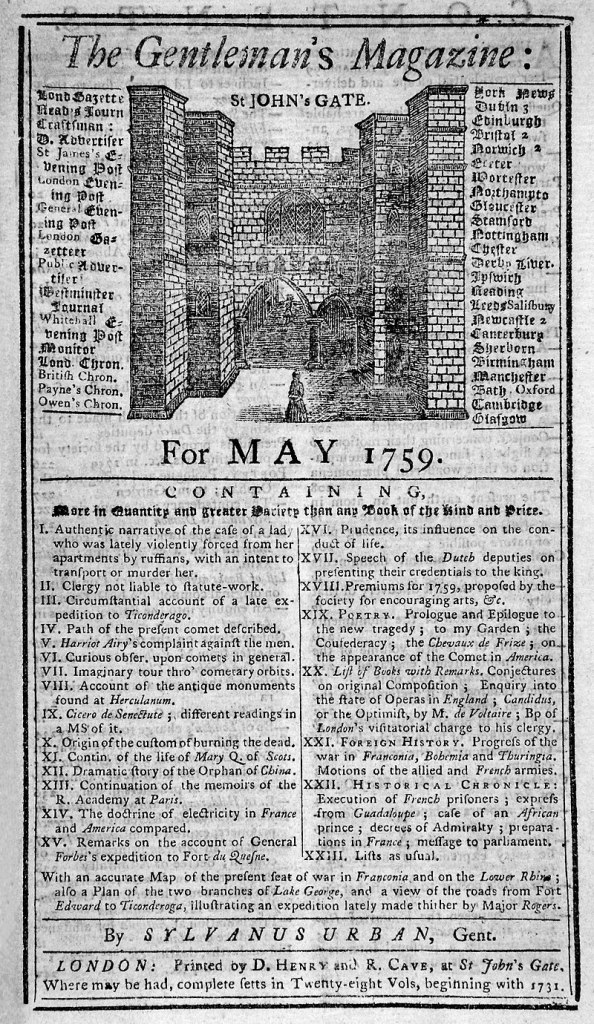
Now having a book to his name, he returned to Lichfield in 1734, where, languishing at home with his mother and brother, he found solace with Walmesley at the Bishop’s Place where he again encountered David Garrick and an expanding group of ladies. Wanting to earn more money by writing, he wrote to David Cave in London, an editor, printer, and publisher who had founded The Gentleman’s Magazine publishing monthly digests of news and articles from other papers, and general information about the London entertainment world, much of it gossipy, creating a convenient way for Londoners to keep up with happenings in the city. The magazine sold in the provinces, too, and was the most famous periodical of the eighteenth century. In his letter, Johnson offered to overhaul the poetry section.
He had also began courting a widow named Elizabeth Porter, a good-looking woman twenty years older with three children. The children wondered why their mother would be interested in a poor young man with no obvious prospects, bad eyesight, scrofula scars, and made disconcerting movements with his head and upper body, but the down-to-earth common sense and insight of his conversation were enough for her to ignore his physical defects and virtual poverty. “This is the most sensible man that I ever saw in my life,” she reportedly told one of her daughters. And he was impressed with her yeoman background (she brought £800 to their marriage) and her literary learning and judgment. He called her “Tetty,” and, amid much disapproval, the couple married no July 9, 1735.
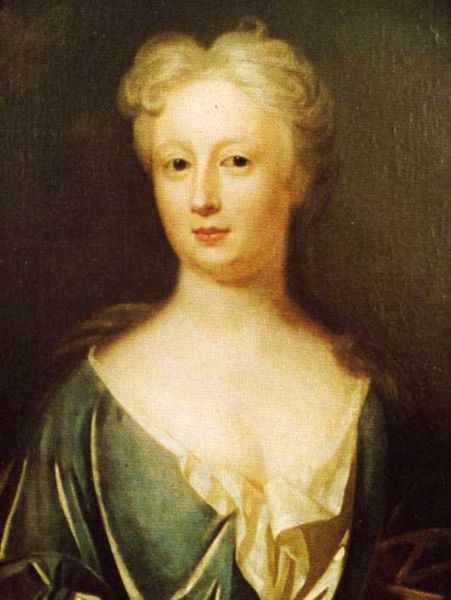
They moved into a farmhouse outside of Lichfield and started a school where young gentlemen were boarded and taught Greek and Latin. The school did not do well, having at most about ten pupils; among the small group of boarders was Davy Garrick, then eighteen and already showing a distracting relish for the theatre. Johnson’s lack of credentials, his large frightening appearance and odd involuntary movements added to the insurmountable problems. He began to realize that teaching in a classroom would not be his calling; he never lacked passion but did not have the right temperament. With the school failing, Johnson girded his courage and proceeded to write a poetic drama based on a piece of Turkish history. Taking several acts to Walmesley, Walmesley advised him to finish the play and get it on the London Stage. This idea took hold, and he and Tetty closed their school so Sam could travel to London and search for literary work. Tetty would remain in Lichfield until Johnson was ready to bring her to London.
All times need men of strength and probity, and Johnson was a fit for the age of the free and energetic eighteenth-century English press. Presses sprang throughout the country as everyone from all social classes seemed to get into the act. But the vulnerability of this new print culture to constantly shifting commercial forces created chaos and results so uneven, forging a “Grub Street” of writing, that some worried England’s literary culture would be corrupted by the growing and cheapening mass commercialism of print and contaminate the moral fiber of society. It was written, “A flood of printer’s ink was a darkness that spread across the land, running into the silver Thames, darkening the minds of the people and their rules, obliterating polite letters.”
At the center of this print whirlwind were the booksellers in London, who when they commissioned or bought work from an author, in effect, owned the copyright into perpetuity. As a result, authors, printers, and couriers were dependent on the bookseller, who hired the printer, spent the money to produce the books and magazines, and commanded the resources for distribution. After the author sold his book, he received no royalties. If the book succeeded the bookseller kept all the profit, and if it failed, he absorbed the losses. Into this uneven playing field Samuel Johnson entered the publishing world of London with two broad choices: he could cultivate booksellers and sell them his original work, or he could write for the periodical press, a safer but anonymous route for an aspiring poet. Already writing verse and prose and translating ancient classics, he could hardly earn enough to subsist on the meager payments, especially with a wife. Still, he would plow ahead.
Accompanied by Davy Garrick, the journey to London began on March 2, 1737, along the main coaching route, taking them less than a week. Garrick would lodge with a friend in Kent, while Johnson would finish the play and try to get it acted and published and find his way in the professional world of letters. His first London residence was an upstairs room on Exeter Street, a cul-de-sac just off the north side of the Strand, costing less than two shillings per week. Landing in the center of an urban vortex where he was bound to hear all the breaking news, he began a lasting love affair with London. The city was his “element,” his “heaven on earth.” He said, “the spirits which I have in London make me do everything with more readiness and vigor.” He liked to eat and drink in taverns, “the throne of human felicity,” which were quiet and given to private conversations. At the Pine Apple he found a rich and varied microcosm of London, patronized by a mix of high and low life; men who were experts in a variety of fields, men who were failures and downtrodden on the edges of society, and luckier ones who bathed in the sunshine of success and esteem.
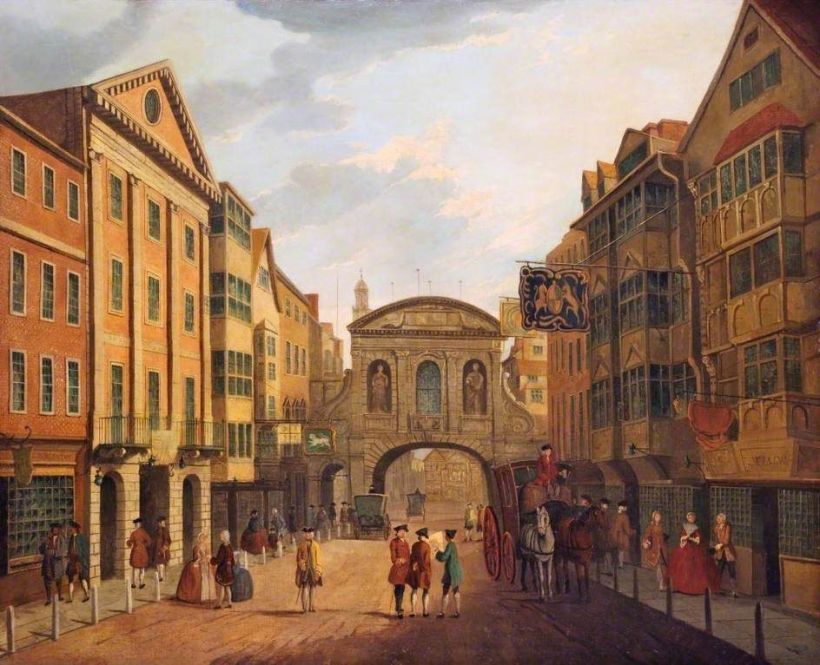
London was a city of coffee houses, taverns and chocolate houses, clubs, societies, and beautiful Wren churches. It had no professional police force, churches stood beside brothels, and lawlessness was rife. Cock fights, bear and bull baiting, and dog fights were common entertainment. Yet this violence and brutality, along with ghastly poverty, existed in close proximity to unexpected tranquility and breathtaking architecture and gardens, and areas of great wealth. From Covent Garden through St. James’s to Mayfair, the West End was wide and handsome, but Johnson’s area, Fleet Street and the Strand was the place to watch life pass by in all its variety. “Fleet Street has a very animated appearance,” Johnson would write, and “the full tide of Human existence,” could be seen at Charing Cross. Anglophiles celebrated Britain’s constitutional monarch and freedom under law, its open society, its prosperity and religious toleration.
A city of the Enlightenment, London was embracing a print culture with periodicals and magazines of specialized and general interest cropping up out of nowhere, as well as novels and even pornography, all devoured by a hungry reading pubic. Writers, musicians, scientists, and artists came in great numbers to see what it was all about. Many like Handel, Haydn, and Benjamin Franklin lingered because their geniuses found the spirit of modernity and freedom congenial to creativity. The modernizers had no stomach for indigestible scholastic husks; they were not ivory towered academics, but men and women of letters who made their pitch in the metropolitan market place, a notion to which Johnson quickly subscribed.
When he finished his play, Irene, Tetty joined him. They found lodging at No. 6 Castle Street near Cavendish Square. There was more money in having Irene acted than published and Johnson felt sure of its success. He presented the play to Charles Fleetwood of the Drury Lane Theatre but could not persuade him to stage it. So, for the moment he had to shelve the play, and with a pressing need for income, appealed to David Cave, who had thrived for several years, running his magazine from St. John’s Gate in Clerkenwell. Johnson wrote him again late in the winter of 1738 including a tactful and flattering poem in Latin. Cave needed to raise the quality of his poetry section, and this Latin poem seemed a good way to start and so he published it in his magazine.
He sent Cave another poem, “London: A Poem,” for which he received a small advance, his first income as a London author. The poem had been written in a furious burst of composition with anger and frustration over what he saw in the streets of London, in the political climate, and in his own personal, economic and professional predicament. Recognizing its energy and motivation, rather than place it in The Gentleman’s Magazine, Cave decided to have it published by the bookseller, Robert Dodsley, who paid Johnson 10 guineas for the copywrite and published it in May. It quickly sold out and two more editions were printed. Though printed anonymously, a small group of people knew it was the work of the unknown Samuel Johnson.
Johnson soon met Richard Savage, who also contributed poems to Cave’s magazine. Savage was reckless and dissipated, having killed someone in a coffee house brawl, but possessed charm and literary ability. His poem, “Of Public Spirit,” especially pleased Johnson by its attack on the government’s exploitation of colonized countries in the name of progress. Johnson felt English poetry was bankrupt of emotional representation of the poor, and seeing Savage as a damaged and spent genius, was attracted to his rebelliousness and readiness to challenge authority. They cherished each other’s company wandering the streets at night together, perambulations around the squares of Westminster, and were together for about two years before Savage was exiled to Wales. When Savage died in a debtor’s prison interest in his career revived and Johnson wrote The Life of Savage. Cave paid 15 guineas for the copyright and published the book on February 11, 1744. The book, well received with moderate sales, was one of the first psychological biographies in Western Literature that told the truth about human nature: the good and the bad, the public and the private.
Johnson pushed Cave to publish more of his work. As someone who could write distinguished prose and poetry, who knew Greek, Latin, French and Italian, who was widely read and possessed an editor’s instinct for revision and public appeal, the variety of ways Samuel could contribute to The Gentleman’s Magazine: criticism, poetry, essays, histories, translations, reviews, biographies, journalistic reporting, and editorial work: would be an enlivening means of broadening his grasp of literature and foreign and contemporary affairs. Cave wanted to rise in the publishing trade to the more lucrative and prestigious realm of book publishing, and Johnson, needing more substantial income than a few epigrams could provide, wanted to write prose – more words meant more printers’ sheets filled and more sheets meant more money. Cave had to achieve a reputation as a publisher of larger works, and Johnson managed to win his confidence.
All who knew him spoke well of this young, energetic literary dynamo who wanted to “grasp the trunk of knowledge and shake all the branches” with his extensive reading, ideas, intellectual sophistication, fascination with foreign lands and curiosity about the “general principals of every science.” One innovation in Cave’s magazine especially caught Johnson’s attention: the debates in Parliament. Cave needed someone to write brisk and imaginative reports on the debates and Johnson took to this task. Sliding into the role of fellow editor, he was soon Cave’s right-hand man. They cleverly framed these reports as scenes from Gulliver’s Travels, a camouflage creating the freedom to report and embellish the debates without fear of prosecution. Cave also published more of Johnson’s biographical work, single-source translations cast into rhythmical and balanced English prose that, with an instinct for satire and moral implications, focused more on reflections of human nature than researched facts.
Though he had done much to reinvigorate The Gentleman’s Magazine, he felt himself buried in hack work. By April 1939, his play, Irene, remained neglected, he wasn’t making much money, and Tetty was drinking and applying too much makeup. Leaving Tetty alone in London, he applied for another teaching position near Lichfield but could not overcome his physically grotesque and uncouth mannerism, and so he returned to Grub Street in the spring of 1740. Britain had just declared war on Spain and the city was hungry for patriotic writing, which, at Cave’s suggestion, Johnson supplied with The Life of Admiral Blake, condensing and restructuring a previous account into seven pages in the magazine. This was followed with The Life of Drake, which in Johnson’s hands became a national symbol of heroic adventure. In the summer of 1741, Cave offered him exclusive authorship of the Parliament debates, which, with notes smuggled out of Parliament, Johnson wrote with astonishing speed, mostly fictionalizing the speeches with an oratorical brilliance they had lacked when given in the halls of power. But cranking out twenty pages of copy per issue was anonymous work leaving him hungry for a reputation. However, one critic remarked that Johnson “found the magazine amateur and left it professional well on its way to a circulation of ten-thousand and a readership much larger.”
He was earning a reasonably good income of £100 a year, but began to wean himself from the magazine, looking for a large project as a pathway to reputation. He helped a physician friend publish a successful Medical Dictionary that compiled information from previous medical works with the purpose of distinguishing the useful from the gossipy hand-me-down remedies, and he worked on annotating the catalogue of a huge collection of books once owned by the Earl of Oxford, a long and frustrating work that one observer noted “engaged in so servile an employment” Johnson “resembled a lion in harness.” Tetty was drinking and spending more time in bed as they moved around to various places near the Strand and Fleet Street. With a small advance from Cave, he worked on a history of the British Parliament for several months, an effort that halted when Parliament restricted access to its manuscripts. Defeated hopes, a disintegrating marriage, and a peripatetic life between lodgings were a call for the black dog to dance in his imagination. And then Shakespeare almost came to the rescue.
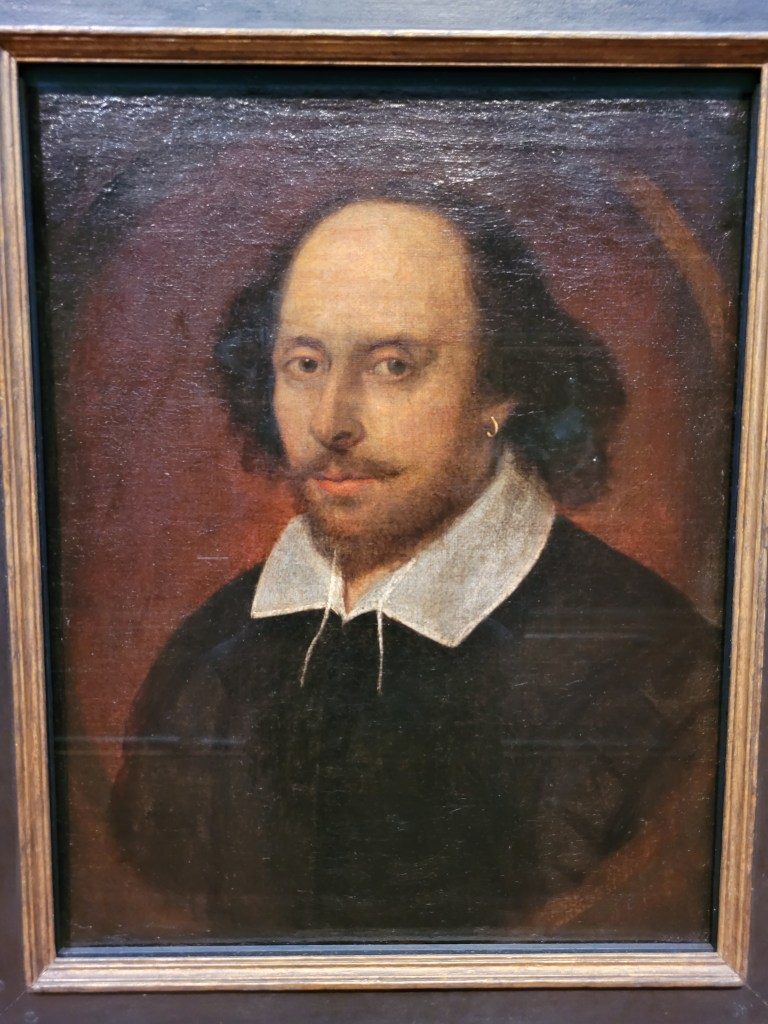
Seeking a slice of the growing Shakespeare market, Cave proposed to Johnson a new edition of William Shakespeare’s plays to be printed in ten small volumes. Johnson thought it would be a great way to establish his reputation and fell to the task in late 1744 with intensity and energy, going through the entire canon and amassing a wealth of data and notes on Shakespeare’s language and ideas in each individual play. When Johnson’s essay “Miscellaneous Observations on the Tragedy of MacBeth” was printed in the April 1745, issue of The Gentleman’s Magazine, an esteemed critic praised it as written by “a man of parts and genius.” But the comprehensive project was killed when a man claimed copyright of Shakespeare’s plays and threatened an injunction against Cave. And so, even as he continued to sift through the plays making notes on Shakespeare’s language, coming to be thought of as the “greatest living authority on Shakespeare’s diction,” in 1746, at the age of 37, enduring much failure and having never had but little money, Johnson was again feeling dejected. But successful booksellers and printers had kept track of Johnson’s mostly anonymous work and were struck by the way he had raised Grub Street writing to high levels by transforming other’s work into witty, learned, colorful and rhythmically pleasing prose. When his friend the successful bookseller, Robert Dodsley, proposed a dictionary of the English Language, light suddenly poured into Johnson’s darkening consciousness, and he emerged from obscurity with boldness and courage.
A dictionary required stamina, organization and classification, and was a far larger project than Dodsley or any other publisher had ever undertaken. Though a large comprehensive dictionary would be a work well received by the public, it was financially risky to do alone, especially by a scholar with no clout to his name, and so Dodsley arranged for a syndicate to become proprietary partners in the project. When they asked for a proposal from Johnson, he wrote a brisk letter clearly stating that his dictionary would be innovative with an extensive use of quotations drawn from the best literary sources to illustrate the meaning of words. On June 18, 1746, he met with the proprietors at the Golden Anchor near Holborn Bar and signed the contract over breakfast. Promising to finish the job in an incredibly short period of three years, they agreed to pay him £1575 in installments, a large contract for any author, and jubilation for Johnson and Tetty.
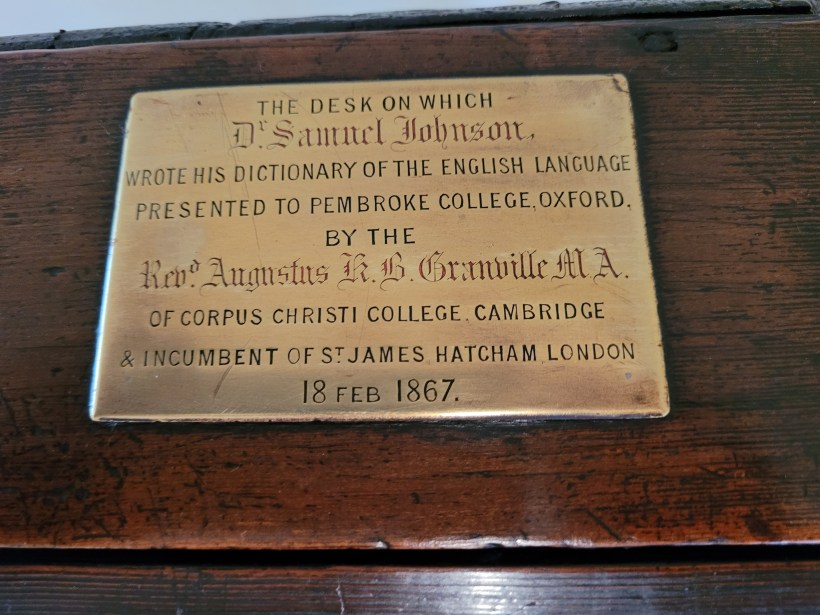
They moved into a house at 17 Gough Square on a quiet square just north of Fleet Street amid a tangle of narrow lanes and dark alleys. Though prostitutes walked the streets, and the air was clogged with smoke from coal and small industries, for Johnson it was perfect. In addition to a basement and garret the house had three main stories and could accommodate many visitors. It was also very close to the thriving pulse of the book trade and the office of the printer William Strahan at 10 Little New Street, whom the booksellers had chosen to print the enormous book. Most critical of all, the top floor consisted of a large attic room ideal as a workshop for the small lexicographical industry that he needed.
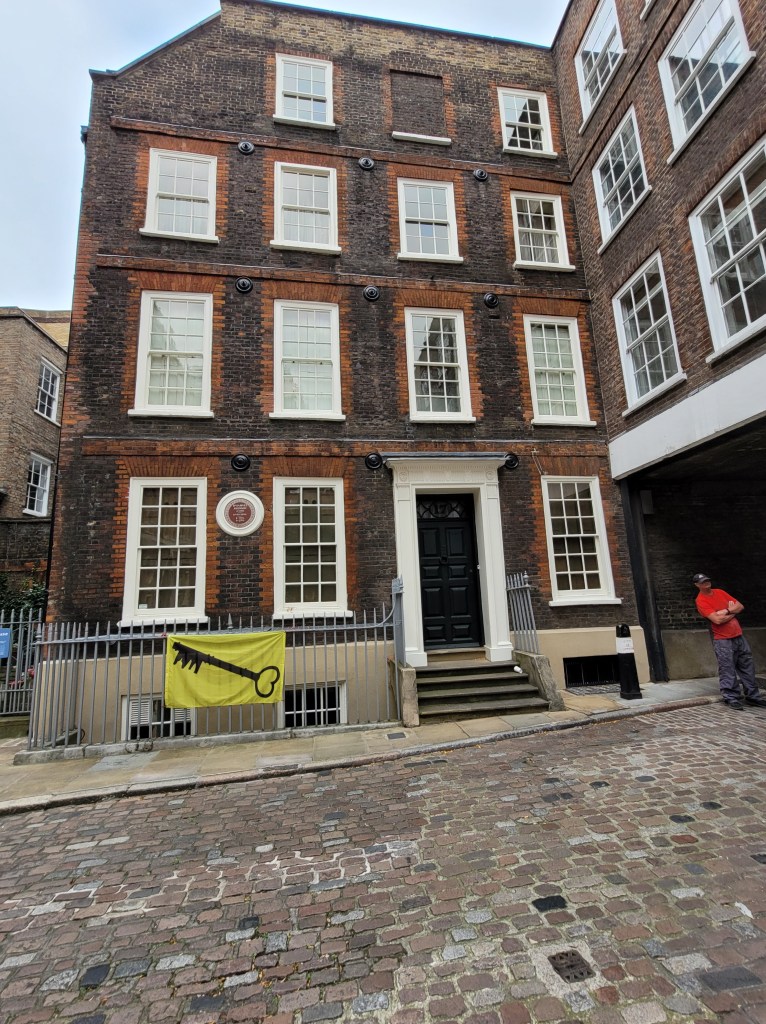
Dozens of dictionaries had already appeared in the 150 years before Johnson became a lexicographer, but they were mostly variations on encyclopedias or reference works on professions and trades. Lagging France and Italy, whose dictionaries had been created by academies, not by one struggling individual, the British lacked a full dictionary that could reflect the pride they had in their language and prevent or at least retard undue changing. For fifty years a succession of great writers; John Dryden, Daniel Defoe, Addison, Pope, and Swift, had vigorously called for a national dictionary. Swift complained bitterly that the language was a mess, a riot of chaos, inconsistency, imports, abuses, and absurdities. They wanted a dictionary like the French and Italians that would put a stop to mindless, corrupting “innovations.” However, the English temper did not travel well in the mode of committees and academies. If ever an academy were to be formed, Johnson would later write, “English liberty will hinder or destroy it.” Entering the dictionary arena alone and well-armed from a lifetime of reading, his was a patriotic, courageous, quintessentially English entrepreneurial publishing venture.
In the attic room at the top of his house Johnson assembled the materials and people he needed. Hundreds of books were brought in to supplement his own, shelves were constructed, tables were set up to accommodate the various stages of research and the physical process of transcribing and cutting and pasting slips, boxes for filling had to be organized too. Johnson treated his books roughly, marking them up with black lead pencils. To finish the dictionary required a herculean effort and to finish at all he needed steady help. He chose six amanuenses paid out of the advance from the booksellers, a significant drain on Johnson’s resources; the chief task of an assistant was to copy illustrative quotations from hundreds of books Johnson had highlighted and help define some of the words.
Despite declaring he would take only three years, more than a year was spent writing a comprehensive statement, The Plan of a Dictionary of the English Language, a thirty-four-page pamphlet of intent and publicity to present himself and stake out his territory. The plan was well received and praised, Johnson plowed through the lexicographical terrain: “By tracing every word to its original and not admitting but with great caution any of which no original can be found, we shall secure our language from being over-run with cant, from being crowded with low terms, the spawn or folly or affectation which arise from no just principles of speech.” But when a friend dropped in at Gough Square, seeing books, slips of paper, notebooks, and boxes strewn all over the attic with a handful of assistants scurrying around, he doubted the dictionary would be completed in three years.
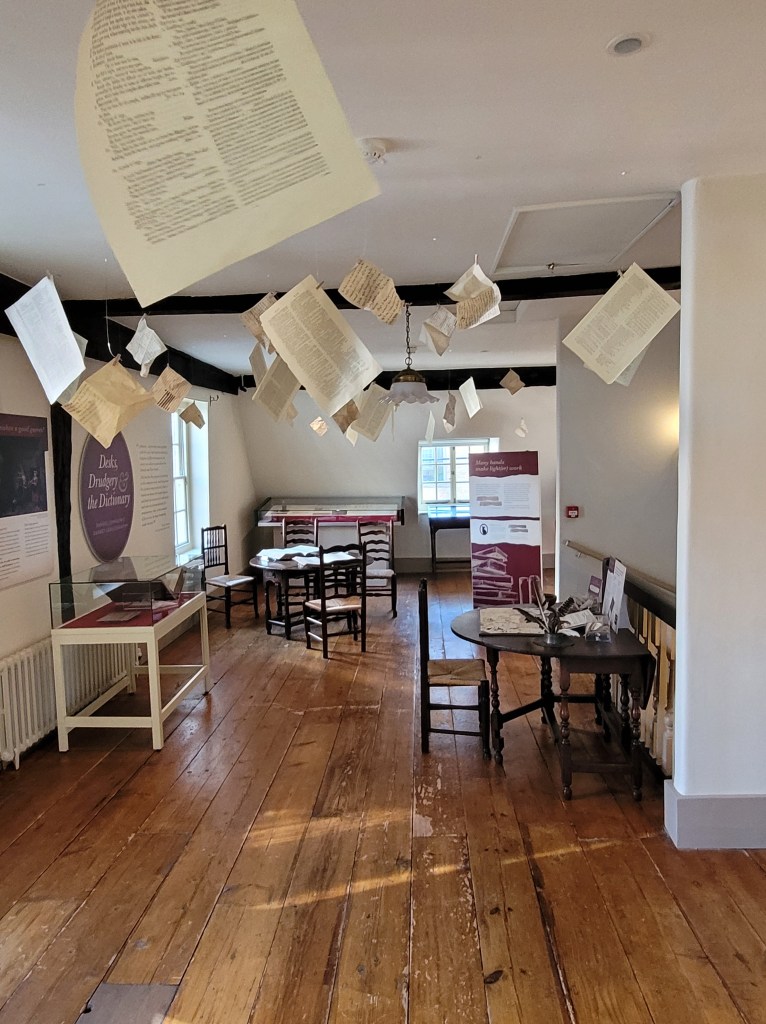
While writing the Dictionary Johnson realized the meaning of words cannot be frozen: when they don’t gain meaning they generally lose it. “Language is the work of man,” he wrote, “of a being from whom permanence and stability cannot be derived.” Though art may sometimes prolong a word’s duration it will rarely give it perpetuity. He would honor popular language as robustly as any lexicographer had ever done and was practical and liberal as he considered which words to include: “The value of a word must be estimated by its use.” This view extended to orthography and etymology. “The present usage of spelling, where the present usage can be distinguished, will therefore in this work be generally followed.” His most challenging task was to define the words, and the definitions would be crowned by quotations that he spent years laboriously collecting from thousands of books.
Progress on the dictionary was difficult; no one had ever done before what he wanted to do. He started by making a word list and then looked for the quotations to illustrate definitions. Believing that the books of great authors determine the language, he took the quotations from the best authors, going as far back as Chaucer and Sir Thomas More. He wanted to see how his method of first collecting quotations and then adding definitions, etymologies and other lexicographical material would work. Creating the notebooks, Johnson based the space needed between words on how many quotations he had collected for a word, how many senses of the word he had come up with, and any other lexicographical information he may include. Everyone had something to do, and rapid progress was made in the first two or three years.
Booksellers were eager to see manuscript copy and have the printing begin. Johnson began to compose the text early in the project, but the difficulties became protracted with so many additions, expansions and revisions that he ran out of space under the entries and the resulting chaotic state of the manuscripts were horrendous for the printer. And there was the problem of definitions. Johnson underestimated the number of senses and variety of usages of each word, his quotations revealed how richly diverse and infinitely alive the language was in meaning. The amanuenses gave him vital help and companionship, and although the three years were not wasted, the booksellers had hoped to publish at the end of that time and were unhappy. He had also used up his advance and Tetty was in a more parlous state than ever.
Meanwhile, David Garrick became the brightest star in the world of theatre. Purchasing in the spring of 1747 half-interest in the Royal Theatre in Drury Lane for £12,000, Garrick invited Johnson to write a prologue for the opening night of his management. In sixty-two lines Johnson described the moral degeneration of contemporary English Drama, starting with the glory of Shakespeare and Ben Jonson and the moral vacuum that ensued with the Restoration, and then proposed that Garrick’s new reign at Drury Lane was about to rescue the London stage.
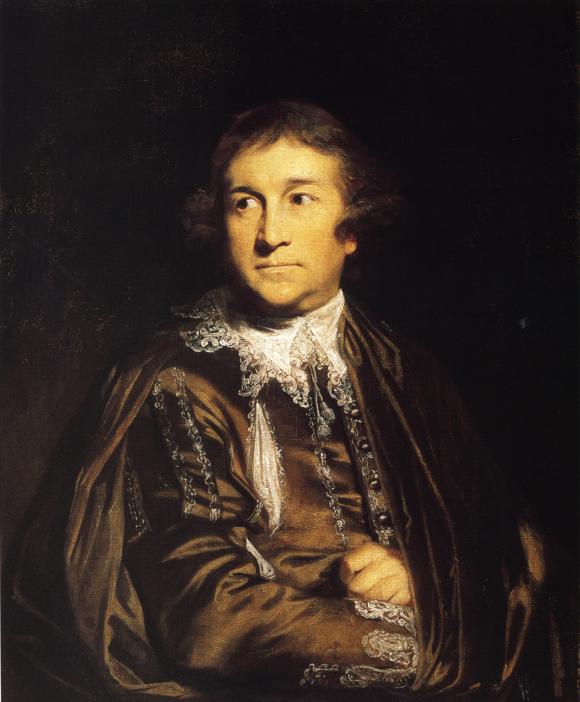
Garrick repaid the favor by staging Johnson’s play, Irene. Ten years had passed since Johnson wrote it and much rewriting had to be done. Johnson resisted Garrick’s suggestions and they sometimes disputed violently. Even after revisions the diction was cold and philosophical, but Garrick had had his way on many passages and the play opened at the Royal Theatre on February 6, 1749, to a lukewarm reception. Garrick would later say, “When Johnson writes tragedy, declamation roars and passion sleeps; When Shakespeare wrote, he dipped his pen in his own heart.” It ran for nine nights, a good run in the 18th century, and Johnson reaped almost £200 in profit.
The isolating pressures of the Dictionary impelled Johnson to found the Ivy Lane Club in the winter of 1748-9. He needed to meet regularly for lively debates with people whose company he enjoyed. The club met every Tuesday night at the King’s Head, a beefsteak house on Ivy Lane between Newgate and St. Paul’s Cathedral. At these meetings his wit sparkled as he told excellence stories that instructed and delighted the company. This birth of this club marked the emergence of Johnson as a monarch of literature, but, also, his marriage had become so estranged that Tetty moved out of Gough Square. Though he liked women a lot, and courted them through flirting, he became lonely and neglected his personal appearance.
Despite all his achievements, Johnson had neither widespread fame nor much financial reward. This changed with his Rambler essays, which placed his name on everyone’s lips. After so much work with the Dictionary he was hungry to express himself fully again, and the Rambler with topics such as education, marriage, wealth, the pride of Londoners, the legal profession and criminality, the arts and theatre, fops, drinking and gambling, prostitution and poverty, gave a platform to interact with the reading public not as a scholar but as a fully engaged guide to the human mind. His persistence through his struggles as an author, scholar, and melancholic, his loneliness and anger over an oppressive society, and a temporary stall with his Dictionary shaped his philosophical and moral voice for the Rambler, which he began publishing on March 20, 1750.
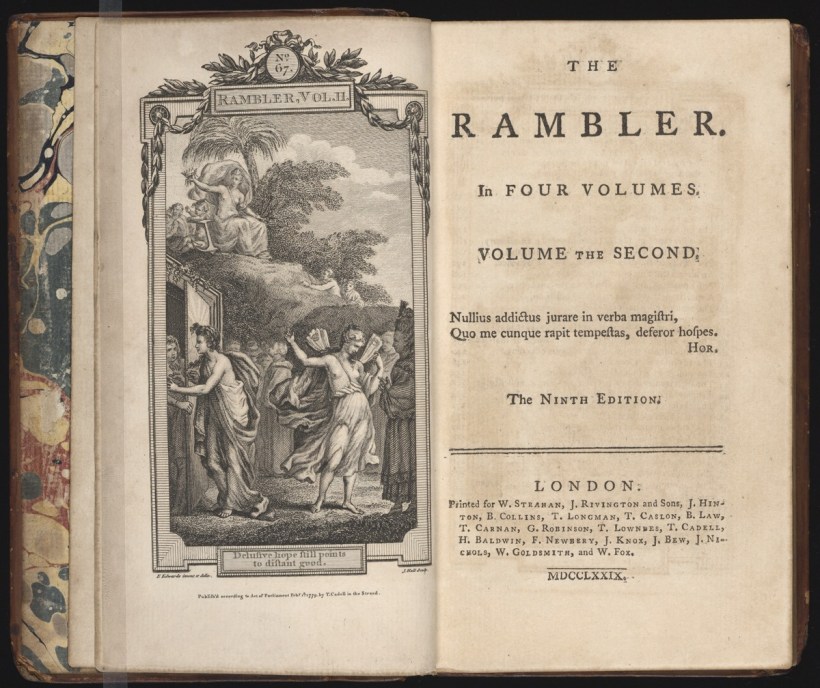
Through sonorous rhythms and elegant, balanced syntax transmitting an air of authority and dignity, these essays configure moral landscapes of reconciliation and community in which humans need to participate in each other’s lives and try to understand one another and established Johnson as one of the great moralist of modern times whose writings on human life and destiny have become a permanent part of the conscience of mankind: ”In order that all men may be taught to speak truth, it is necessary that all likewise should learn to hear it.” The Rambler was crucial to his own mental health as well as to thousands of readers who were looking for a hard moral realism blended with Christian benediction. Edward Cave and two other publishers paid him for each essay, there would be 208, and he needed the money.
The publishers of the Dictionary were threatening to cut off the money and supplies, and the anxiety over the huge amount left to be done, and Johnson’s remorse at neglecting it for almost two years, swelled to a pitch causing writer’s block. Finally, he summoned courage and energy and completed and copied for the printer words between Carry and Dame. But Tetty’s health rapidly deteriorated and when she died on March 18, 1752, Johnson was overwhelmed by grief. “When my dear Mrs. Johnson expired,” he would later say, “I sought relief in my studies and strove to lose the recollection of her in the toils of literature.” He composed a prayer at the start of November 1752, asking God to help him “shun sloth and negligence.” The wheels began to turn again as the grief began to recede. By April 3, 1753, he had completed the first volume and was moving into the second volume. He began to work with his two remaining amanuenses incredibly fast and completed the second volume within eighteen months. From his notebooks the amanuenses copied the cropped quotations onto the sheets. He focused more on preparing text and proofing copy, and to the delight of the proprietors, composing copy faster than it was being printed.
In July 1754, as the work drew to an end, he traveled to Oxford to research the prefaces in the library of Trinity College. He wrote the prefaces, “History of the English Language” and “Grammar of the English Tongue,” in the fall. They were honest and moving revelations. “Art is long and life is short. To pursue perfection was like chasing the sun: when you’ve reached the hill where he seemed to rest, [the sun] was still beheld at the same distance.” When Volume II was completed typesetting and proofing began, printing was completed in March 1755. On the threshold of enormous fame, just before publication, a boost to his confidence came when the principals of Oxford conferred upon him the degree of “Master of Arts” for having “very eminently distinguished himself by the publication of a series of essays [The Rambler] excellently calculated to form the manners of the people . . . and shortly intends to publish a Dictionary of the English Tongue.”
“I now begin to see land after having wandered in this vast sea of words,” wrote Johnson as he nervously awaited publication of the Dictionary. “What reception I shall meet upon the shore I know not, whether the sound of bells and acclamations of the people or a general murmur of dislike.” And leaving behind the accepted notion that linguistic authority was invested in a privileged social class, “There is no absolute language, no ideal meanings for words, no set of eternal rules governing form and development of languages,” the King’s English had been democratized into the Authors’ English.
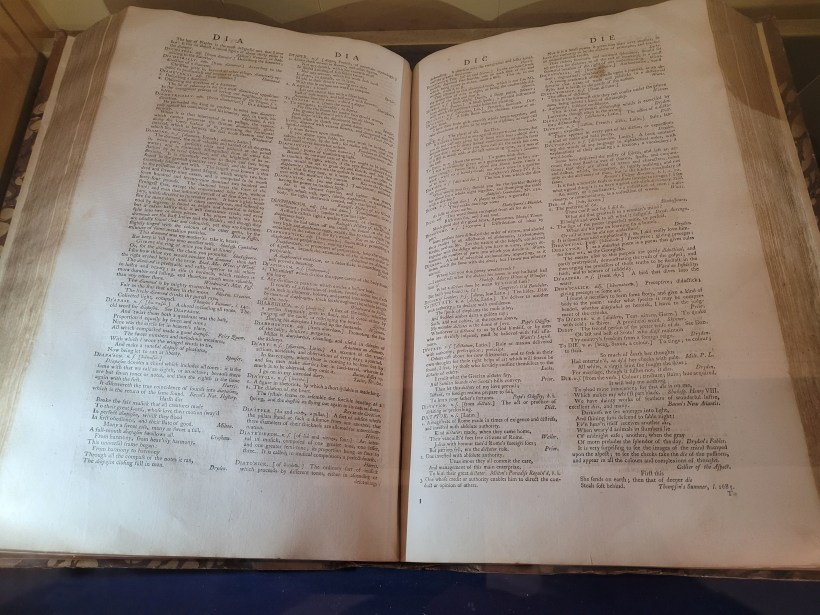
2000 copies of the Dictionary were published on April 15, 1755, available in two folio volumes running to more than 2500 pages at a price of £4. The reviews were extremely good. The books would sell very well, especially in a cheaper condensed version. The poet Christopher Smart wrote that he looked upon the Dictionary as he did St. Paul’s Cathedral. It had taken a French academy forty years to produce a dictionary many thought inferior to Johnson’s, which became a standard work against which past and future dictionaries were measured. In 1762 he was granted a royal pension of £300 a year, ending any financial difficulty for the rest of his life. At the King’s request, he had a private audience with young George III as the years of his life became known as “The Age of Johnson.” The great American Critic Harold Bloom would write “I worship Johnson, particularly on Shakespeare.”
 Wylie Graham Mclallen